


When organisations talk about AI strategy, the conversation usually starts in the same place: tools, models, and use cases.
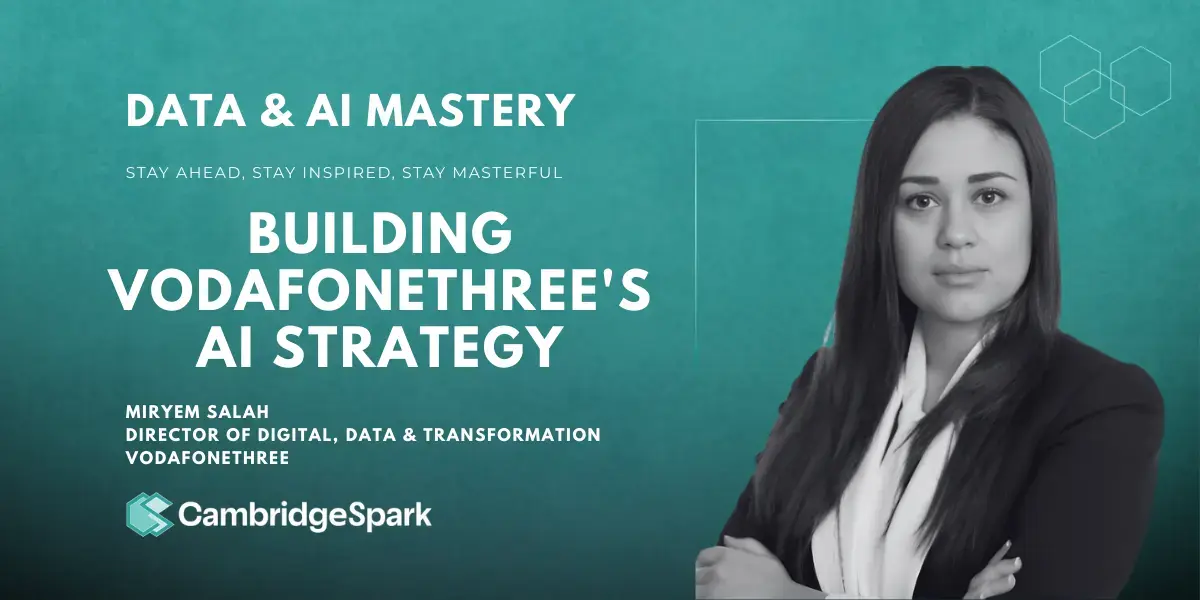
For Miryem Salah, Director of Digital, Data and Transformation at VodafoneThree, that instinct is exactly what gets most organisations into trouble.
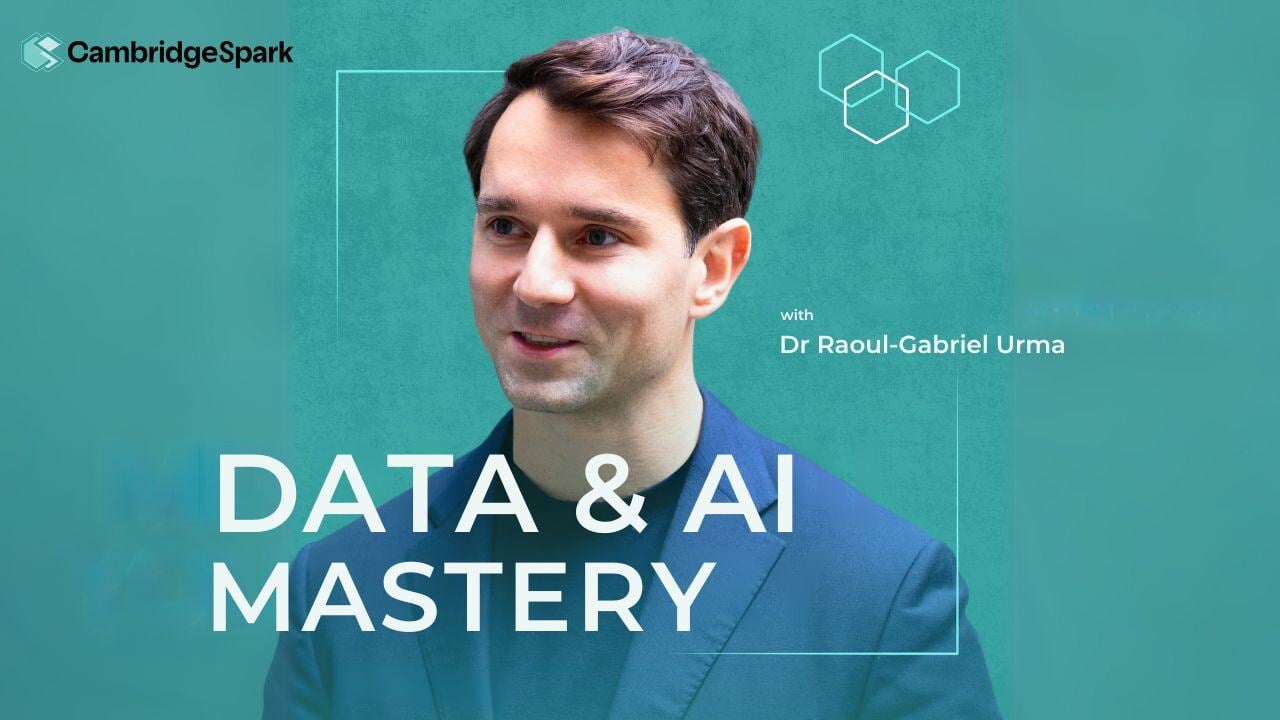
In her conversation with Dr. Raoul-Gabriel Urma on Data and AI Mastery, Miryem shares a perspective built from the inside of one of the most ambitious post-merger transformations in UK telecoms. The message is clear: before you can win with AI, you have to be honest about where you actually are.
The FOMO Trap
There is a pattern playing out across almost every industry right now.
Organisations sense that AI represents a fundamental shift. They feel pressure to move quickly. So they do. They adopt new tools, launch pilots, and announce initiatives. But the value never quite materialises.
Miryem has seen this up close.
"Everybody is running because they have a fear of missing out. Everybody wants a new shiny tool. They get there first, but the value is not quite there because they haven't done it appropriately."
The problem is not ambition. The problem is the sequence. Organisations are reaching for competitive advantage before they have fixed the foundations that make advantage possible.
If your data is fragmented, your governance is weak, and your teams are not aligned, no AI tool will save you. In fact, it will amplify the chaos you already have.
Miryem's advice is refreshingly direct: if you have too much tech debt, do not even try to race to the front. Fix the basics first. That is not a retreat. That is strategy.
Building from First Principles
When VodafoneThree began shaping its AI strategy, Miryem's team did something most organisations skip entirely. They sat down and asked a fundamental question: what do we actually know?
Not what the market is doing. Not what their competitors were announcing. What they knew, with confidence, about their own business.
From that starting point, they built a framework anchored in three pillars: sell, build, and run. Where does AI fit inside each? What does the balance between human intelligence and artificial intelligence look like in each domain? What percentage of each function could be augmented, and over what timeframe?
That level of rigour is rare. It is also what separates a genuine AI strategy from a collection of disconnected pilots.
They then did something equally important. They took that work on the road. Twenty partners, from big tech to consultancies to advisory firms, were invited to stress-test the strategy and offer feedback. The goal was not validation. It was calibration.
Governed Agility: A New Way of Managing Change
One of the most useful ideas to emerge from the conversation is what Miryem calls governed agility.
For years, the debate in transformation circles has been waterfall versus agile. Miryem's position is that in the era of AI, that binary is no longer adequate.
Foundations, including security, privacy, ethical AI, and responsible governance, require discipline and rigour. A more waterfall-style approach, with clear gateways and sign-offs, is appropriate here. The cost of getting this wrong is simply too high.
But once those foundations are solid, implementation and experimentation should be agile. Test, learn, iterate. Move fast where you can afford to, and slow down where the stakes demand it.
It is a practical framework, one that reflects the reality of operating a large, regulated business in a fast-moving technology environment.
People Are Still the Strategy
Beneath all of the strategic frameworks and governance models, Miryem returns consistently to one theme: people.
No transformation succeeds without bringing people on the journey. And bringing people on the journey requires leaders who are willing to model the behaviours they are asking of others.
"You can't ask people to do something if you're not doing it yourself."
That principle extends beyond AI adoption. It underpins the Women in Data network Miryem founded at Vodafone, which now spans 100,000 employees across the group. The network was built on the same logic: change requires visible examples, not just policies.
The most sophisticated AI strategy in the world will stall if the people inside the organisation do not understand it, trust it, or feel part of it.
The Lesson for Every Data and AI Leader
Miryem's experience at VodafoneThree is a reminder that the organisations most likely to win with AI are not necessarily the ones moving fastest. They are the ones moving most deliberately.
Know your foundations. Fix what is broken before you build on top of it. Design your strategy from first principles rather than reacting to market noise. And invest as much energy in your people as you do in your platforms.
Competitive advantage in AI is real. But it is built, not bought.
At Cambridge Spark, we help organisations develop the data and AI capabilities that drive genuine transformation, combining technical depth with leadership development, adoption strategy, and measurable impact.
👉 Explore how we support data and AI transformation